
Vietnam PP Woven Bags Manufacturer – Reliable OEM & Export Supplier
How experienced buyers really evaluate manufacturers beyond capacity and price
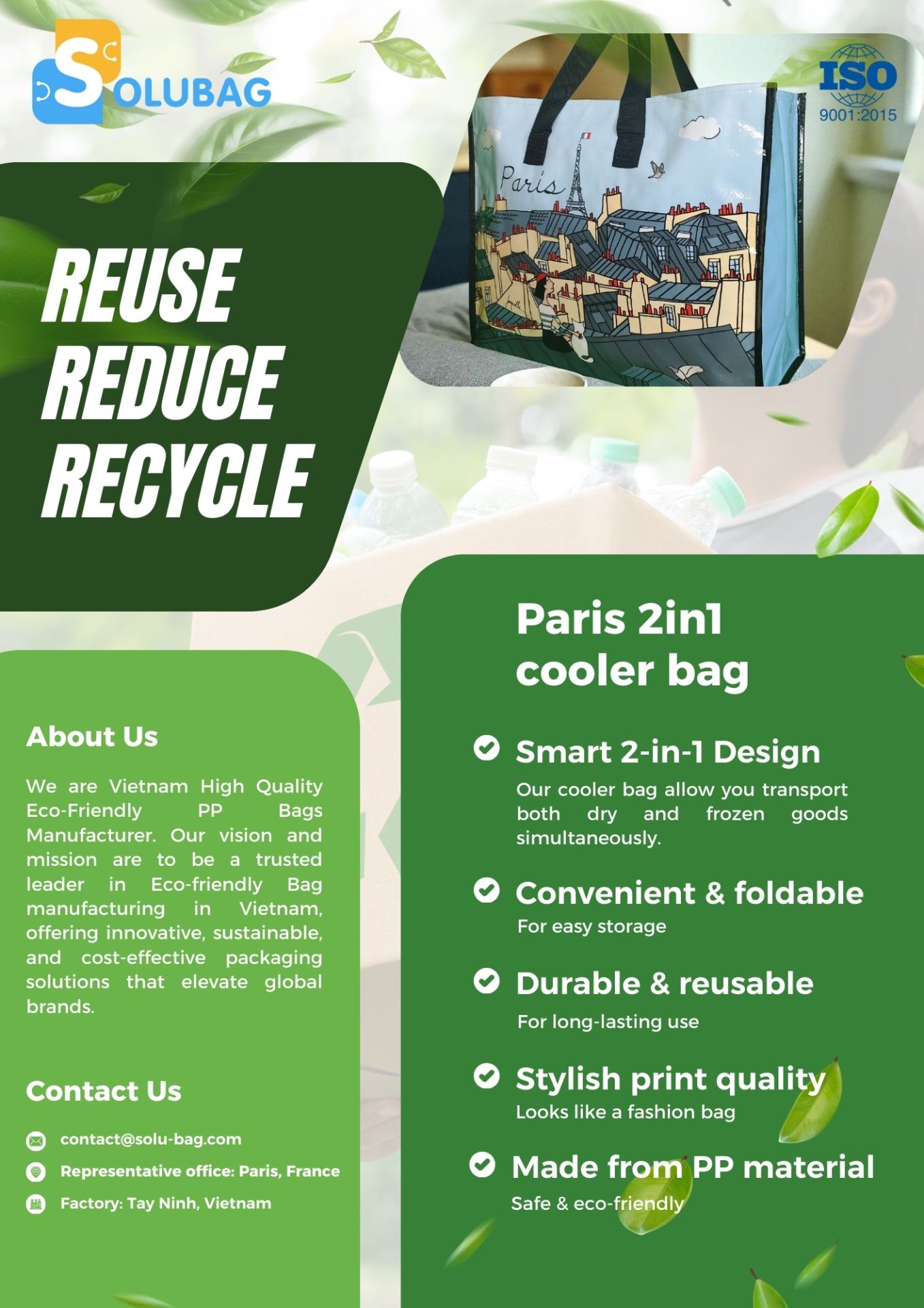
Choosing a PP woven bags manufacturer today is no longer about finding the largest factory or the lowest unit price. For distributors and importers serving the US and UK markets, manufacturer selection has become a decision about consistency, execution discipline, and long-term reliability. Solu bag Viet Nam are a trusted woven PP bags manufacturer Viet Nam, providing durable, high-quality polypropylene bags for agriculture, industry, and packaging. Our factory offers custom sizes, printing options, and bulk production to meet global export standards. With competitive prices, strict quality control, and fast delivery, we help businesses find strong, reusable, and cost-effective packaging solutions.
The term “PP woven bags manufacturer” means different things to different buyers
On paper, the term PP woven bags manufacturer sounds simple.
A factory.
Machines.
Workers.
Output.
In practice, buyers rarely use the term that way.
For distributors and importers, especially in mature markets like the US and UK, “manufacturer” is shorthand for something more complex: How decisions are made on the factory floor How problems are handled when they appear How predictable outcomes are over time
Two factories can produce the same PP woven bag sample.
Only one will produce it the same way, consistently, six months later.
That difference matters more than most brochures suggest.
Why capacity is rarely the decisive factor anymore
Many manufacturer profiles lead with capacity.
Monthly output.
Number of looms.
Factory size.
Capacity still matters but mostly as a baseline requirement, not a differentiator.
From a buyer’s perspective: Excess capacity does not guarantee consistency Underutilized capacity does not mean flexibility Rapid scaling often increases variance
Experienced importers have learned that capacity answers only one question:
Can this factory produce enough bags if everything goes well?
The harder question is:
What happens when things do not go well?
That is where true manufacturing capability is revealed.
Manufacturing behavior matters more than manufacturing claims
One of the quiet lessons buyers learn over time is that manufacturing quality is as much about behavior as it is about process.
How does the factory react when: Raw material prices fluctuate A specification is unclear Adeadline becomes tight
Some manufacturers respond by: Cutting corners quietly Shifting responsibility Adjusting without communication
Others respond by: Clarifying assumptions Documenting changes Setting boundaries early
Both may deliver a shipment.
Only one builds confidence.
When buyers evaluate a PP woven bags manufacturer, they often remember how problems were handled more clearly than how smoothly orders went.
The growing importance of repeatability over customization
Customization has long been a selling point in PP woven bags.
Colors.
Printing.
Handles.
Finishing.
Customization still has value but repeatability has overtaken it in priority.
For distributors supplying multiple clients, repeatability means: Fewer quality disputes Easier forecasting Faster reorders
Manufacturers who can repeat the same product with minimal variation over time reduce friction across the entire supply chain.
In contrast, factories that treat every order as a new project often create invisible costs for their buyers.
Customization attracts attention.
Repeatability earns trust.
Why documentation has become a signal of manufacturing maturity
Documentation rarely appears in marketing materials.
Yet for many buyers, it is one of the strongest signals of manufacturing maturity.
Clear documentation shows: How specifications are interpreted How tolerances are defined How changes are approved
In PP woven bags manufacturing, where small differences in weave density or lamination thickness can affect performance, documentation protects both sides.
Buyers serving US and UK markets increasingly expect: Written confirmation of key specs Traceable decision points Consistency across production runs
This expectation is not about bureaucracy.
It is about reducing ambiguity.
Price remains important but only within a controlled framework
No wholesale buyer ignores price.
But experienced buyers rarely evaluate price in isolation.
They consider: Cost of corrections Cost of delays Cost of inconsistency
A lower unit price loses its appeal quickly if it introduces uncertainty into delivery schedules or customer commitments.
For this reason, many importers now work with manufacturers through: Defined pricing frameworks Volume corridors Agreed adjustment mechanisms
This approach favors manufacturers who understand long-term programs rather than short-term wins.
Why manufacturers who “say yes” too easily raise concerns
It may sound counterintuitive, but manufacturers who agree to everything often make buyers uncomfortable.
When a PP woven bags manufacturer: Accepts vague specifications Promises unrealistic lead times Avoids asking difficult questions
it signals a lack of internal discipline.
Experienced buyers know that constraints exist in any factory.
Manufacturers who acknowledge those constraints early tend to manage outcomes better.
Clarity builds confidence.
Over-accommodation creates risk.
The role of internal decision-making speed
Speed matters in manufacturing but not in the way many assume.
Fast responses are valued.
Fast decisions without alignment are not.
Buyers increasingly pay attention to: How decisions are escalated internally Who approves changes How communication flows between departments
A manufacturer that responds quickly but inconsistently creates confusion.
A manufacturer that responds deliberately but clearly often becomes a preferred partner.
In PP woven bags manufacturing, internal coordination is a competitive advantage.